 |
 |
 |
 |
 |
 |
 |
|||||||
 |
|||||||
 |
|||||||
 |
|||||||
 |
|||||||
|
|||||||
 |
|||||||
 |
|||||||
|

 |
||
|
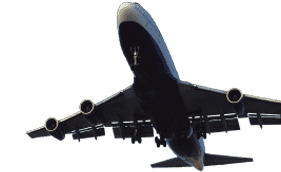
An increasing demand for and reliance on worldwide commercial air transport has created situations that pose significant threats to air safety: Hartleyarms
|
 |
|
|
These scenarios have become the primary focus of regulatory and safety agencies around the world. The top areas of concern:
Max-Viz responds with unprecedented vision. Max-Viz systems use “uncooled” infrared sensors to gather data about runways, terrain and any potential obstacles on the ground or in flight. These images are enhanced, relayed and displayed in real time on any head-down video-capable cockpit display and/or raster-capable head-up display (HUD). In rain, snow, haze, smoke and nighttime
flying, Max-Viz greatly improves pilots’ overall situational
awareness. By allowing the flight crew to see what’s really
out there, Max-Viz EVS reduces stress and adds a significant margin
of safety.
EVS products for Commercial Transport: |
||
|
||